

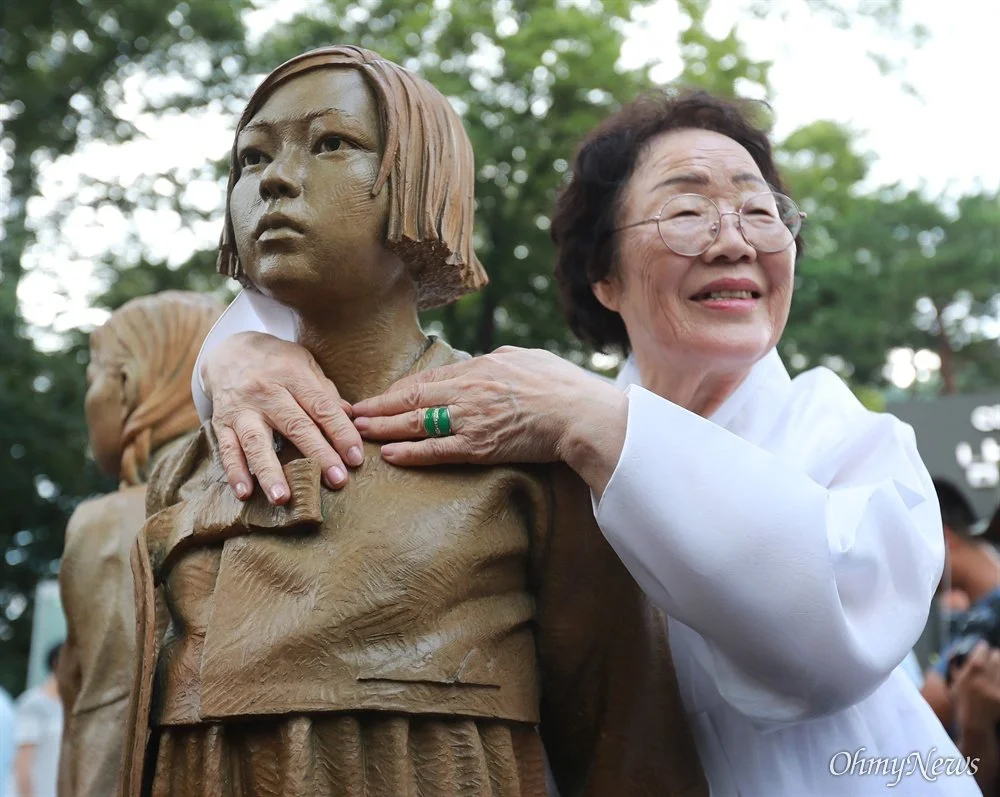
“I strongly believe that this issue will be solved eventually. I also believe the history of comfort women should be recorded in UNESCO[‘s Memory of the World Register].”
- Ms. Lee Yong Soo, South Korean comfort woman survivor
Ms. Lee Yong Soo
The House of Sharing represents the courage, perseverance, and resilience of the surviving comfort women from WWII. Founded in June 1992 in Gwangju, Seoul, through funds raised by Buddhist organizations, the House of Sharing serves as a nursing home for surviving comfort women and is also the site of the Museum of Sexual Slavery by the Japanese Military.
From my interview with Ms. Lee, I took away three main points. First, I learned that Korean comfort women survivors continue to advocate for their rights to receive reparations and for their history to be recognized. I came to respect their courage in challenging the negative labels associated with “comfort women” and using their personal experiences to highlight the historical injustices they faced. Second, I learned that both the Korean government and the public still remain indifferent to the suffering of comfort women; the government's efforts often overlook the existing survivors, and many blame the protestors for raising awareness about what they consider to be an “embarrassing” part of Korean history. Third, I learned that the House of Sharing plays a key role in helping survivors’ stories be remembered and passed down to future generations. Even though it receives little attention, the House of Sharing gives survivors a sense of relief and symbolizes their brave spirit, even after they are gone.
For anyone who wants to learn more about the history of Korean comfort women, I strongly recommend visiting the House of Sharing during your trip to Korea. The pictures of the survivors, along with their oral histories and paintings, can evoke a strong emotional connection between the audience and these historical events.
House of Sharing and Museum of Sexual Slavery by the Japanese Army
85 Gasaegol-gil, Toechon-myeon, Gwangju-si, Gyeonggi-do, South Korea
